Before the rise of meticulously curated playlists and the ubiquity of digital music, there was a simpler, more communal approach to crafting the perfect party atmosphere. And no genre embodied that spirit quite like disco.
Emerging from the underground club scene of New York City in the early 1970s, disco wasn't just music; it was a cultural phenomenon. It was a rebellion against the rock-dominated airwaves, a celebration of diversity, and an invitation to everyone, regardless of race, gender, or sexual orientation, to lose themselves in the rhythm. The very name, derived from the French word 'discothèque' (a type of nightclub), hinted at its origins as a space dedicated to collective dance and uninhibited joy.
The early disco sound, pioneered in clubs like David Mancuso's The Loft and Nicky Siano's The Gallery, was a melting pot of musical influences. Soul, funk, Latin rhythms, and psychedelic rock all blended together, creating a hypnotic and infectious groove. DJs weren't just playing records; they were crafting sonic journeys, extending tracks, and seamlessly mixing songs to keep the energy flowing all night long. This emphasis on the continuous mix was a radical departure from traditional radio formats and set the stage for the modern DJ culture we know today.
One of the defining characteristics of disco was its emphasis on the producer. Legendary figures like Giorgio Moroder, Nile Rodgers, and Bernard Edwards weren't just songwriters; they were architects of sound. They meticulously crafted every element of the music, from the driving basslines and shimmering strings to the soaring vocals and intricate percussion. Moroder's work with Donna Summer, in particular, pushed the boundaries of electronic music and helped to define the Eurodisco sound, characterized by its synthesized textures and futuristic aesthetic.
Nile Rodgers and Bernard Edwards, as the core of Chic, brought a sophisticated funk sensibility to disco. Their tracks, like 'Le Freak' and 'Good Times', were infectious dance anthems with deceptively complex arrangements. The bassline from 'Good Times', in particular, became one of the most sampled grooves in music history, providing the foundation for countless hip-hop tracks and beyond.
The sound of disco was also shaped by the advancements in music technology. Synthesizers, drum machines, and effects processors became increasingly accessible, allowing producers to create richer, more layered soundscapes. The Roland TR-808 drum machine, in particular, became a staple of disco production, providing the distinctive rhythmic pulse that defined the genre.
Disco wasn't just about the music; it was about the entire experience. The fashion, the dance moves, the visual spectacle – all these elements contributed to the immersive world of disco. Sequins, platform shoes, and flamboyant hairstyles were de rigueur on the dance floor. Dance crazes like the Hustle and the Bus Stop swept the nation, providing a shared language of movement and expression. And clubs like Studio 54 became legendary for their extravagant parties, attracting celebrities, artists, and socialites from all walks of life.
The cultural impact of disco extended far beyond the dance floor. It challenged social norms, broke down barriers, and gave a voice to marginalized communities. Gay clubs, in particular, played a crucial role in the development of disco, providing a safe and inclusive space for people to express themselves freely. Disco became an anthem of liberation, a celebration of identity, and a call for equality.
However, the disco era wasn't without its controversies. The genre faced backlash from rock fans who saw it as formulaic and soulless. The infamous 'Disco Demolition Night' at Comiskey Park in Chicago in 1979, where a crate of disco records was blown up on the baseball field, became a symbol of this cultural divide. But despite the backlash, disco's influence continued to reverberate through music and culture.
In the 1980s, disco evolved into new forms, like boogie, Hi-NRG, and Italo disco. These subgenres retained the infectious energy and danceable rhythms of disco while incorporating new sounds and technologies. Artists like Madonna, Michael Jackson, and Prince all drew heavily from disco's legacy, incorporating its elements into their own groundbreaking work.
Today, disco is experiencing a resurgence in popularity. Artists like Daft Punk, Bruno Mars, and Dua Lipa have all embraced the disco sound, introducing it to a new generation of listeners. DJs and producers are digging through crates of old disco records, rediscovering forgotten gems and reinterpreting them for the modern dance floor. And the spirit of disco – its emphasis on inclusivity, celebration, and uninhibited joy – continues to inspire artists and audiences around the world.
The enduring legacy of disco lies in its ability to bring people together. It's music that transcends boundaries, breaks down barriers, and invites everyone to participate in the collective experience of dance. Whether it's a packed nightclub or a living room dance party, the sound of disco continues to define the sound of celebration.
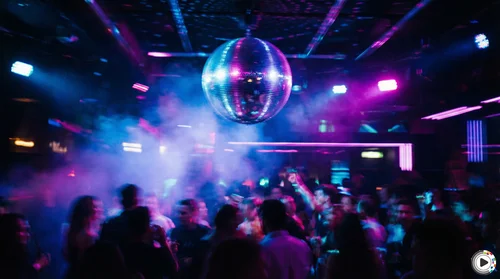
From the mirror ball's shimmering reflections to the pulsating bassline that moves your feet, disco is more than just a genre. It's a feeling, a memory, and a promise of good times. It’s the soundtrack to countless celebrations, the heartbeat of a generation, and a reminder that sometimes, the best way to connect is to simply let go and dance.