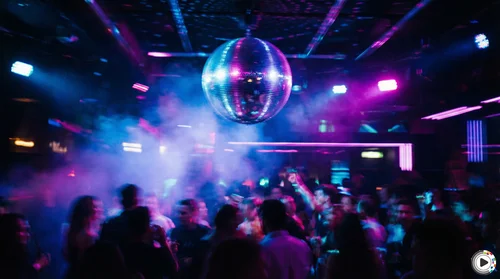
Before the strobe lights and mirrored balls, before DJs and digital downloads, there was the primal urge to move together, to express joy, sorrow, triumph, and connection through rhythm. Party time, in its most fundamental form, is an ancient impulse, woven into the fabric of human experience. It is the universal language spoken through the body, a language that transcends cultural boundaries and unites us in shared moments of sonic-driven ecstasy.
The story of party music is, in essence, the story of dance itself. From the ecstatic, whirling dervishes of Sufi traditions to the carefully choreographed court dances of Renaissance Europe, music has always been the catalyst, the driving force behind collective movement. Consider the ancient Greek festivals dedicated to Dionysus, the god of wine and revelry. These were not merely casual gatherings; they were deeply spiritual experiences, fueled by the intoxicating sounds of aulos pipes and percussion, leading to states of collective frenzy and catharsis. The music wasn't just an accompaniment; it was the engine, dictating the pace and intensity of the dance, guiding participants into altered states of consciousness.
Across the Atlantic, indigenous cultures of the Americas developed equally profound relationships between music and dance. The intricate rhythms of Mayan ceremonies, the hypnotic chants of Native American rituals – these were not mere performances; they were sacred dialogues with the spirit world, facilitated by the power of music and movement. The drum, in particular, played a central role, its deep, resonant tones acting as a heartbeat, connecting participants to the earth and to each other. Each beat a step, each rhythm a story.
As societies evolved, so too did their party music. The medieval era saw the rise of folk dances, often accompanied by simple instruments like the lute and the bagpipe. These dances were expressions of communal identity, opportunities for social interaction, and a welcome respite from the hardships of daily life. The Renaissance brought a newfound emphasis on elegance and refinement, reflected in the elaborate court dances that became a symbol of power and status. Composers like Michael Praetorius meticulously documented these dances, preserving not only the steps but also the musical forms that accompanied them.
The Baroque period ushered in a new era of musical complexity, with composers like Johann Sebastian Bach and George Frideric Handel crafting intricate suites of dances, each with its own distinct character and tempo. These were not merely functional pieces; they were works of art in their own right, showcasing the virtuosity of both the composers and the dancers. The minuet, the gavotte, the sarabande – these dances became integral parts of the Baroque musical landscape, influencing everything from concertos to operas.
The 19th century witnessed the rise of the waltz, a dance that scandalized polite society with its close embrace and rapid turns. Composers like Johann Strauss II transformed the waltz into a symphonic experience, creating opulent soundscapes that evoked the grandeur and romance of Vienna. The waltz became a symbol of the era, a soundtrack to a time of unprecedented social and technological change.
The 20th century saw an explosion of new dance forms, each with its own distinct musical style. From the syncopated rhythms of jazz to the rebellious energy of rock and roll, music became a vehicle for social change and self-expression. The Charleston, the jitterbug, the twist – these dances were not just steps; they were statements, declarations of independence and individuality. The dance floor became a battleground for cultural identity, a place where young people could challenge the norms and express their own unique perspectives.
The latter half of the 20th century witnessed the rise of disco, a genre that celebrated hedonism and liberation. Disco's infectious rhythms and glamorous aesthetic provided an escape from the anxieties of the Cold War era. Studio 54 became the epicenter of disco culture, a haven for celebrities and socialites, where the music never stopped and the party never ended. Giorgio Moroder's pioneering use of synthesizers transformed the sound of disco, paving the way for the electronic dance music (EDM) that would dominate the club scene in the decades to come.
House music, born in the underground clubs of Chicago in the 1980s, took the repetitive rhythms of disco and stripped them down to their bare essentials. DJs like Frankie Knuckles and Larry Levan pioneered a new form of musical expression, using turntables and drum machines to create hypnotic soundscapes that blurred the boundaries between genres. House music became a global phenomenon, spreading from Chicago to New York to London to Berlin, each city adding its own unique flavor to the mix.
Techno, originating in Detroit around the same time as house, embraced a more futuristic and industrial sound. Pioneers like Juan Atkins, Kevin Saunderson, and Derrick May drew inspiration from Kraftwerk and other electronic music pioneers, creating a stark, minimalist sound that was both exhilarating and unsettling. Techno became a symbol of urban decay and technological alienation, reflecting the anxieties of a generation grappling with rapid social and economic change.
The rave scene of the late 1980s and early 1990s brought house and techno to a wider audience, transforming abandoned warehouses and open fields into temporary sanctuaries of sound and light. The rave scene was more than just a party; it was a cultural movement, a celebration of unity, peace, love, and respect (PLUR). Ecstasy, the drug of choice for many ravers, amplified the sense of connection and euphoria, creating a shared experience that was both transcendent and transformative.
Today, party music is more diverse and fragmented than ever before. From the bass-heavy sounds of dubstep to the euphoric melodies of trance, from the intricate rhythms of drum and bass to the politically charged lyrics of hip-hop, there is a genre to suit every taste and mood. Music festivals like Coachella, Glastonbury, and Tomorrowland have become global destinations, attracting millions of people from all over the world to celebrate the power of music and dance.
The evolution of party music is a reflection of our ever-changing society. It is a story of cultural exchange, technological innovation, and the enduring human desire to connect with each other through rhythm and movement. Whether it's the hypnotic beat of a tribal drum or the pulsating bass of a techno track, party music has the power to transport us to another time and place, to liberate us from our inhibitions, and to remind us of our shared humanity. It is a universal language, spoken through the body, a language that will continue to evolve and adapt as long as there are people who want to dance.